Preserving the Spirit: Archiving an Era of Ultra-Low-Cost Aviation
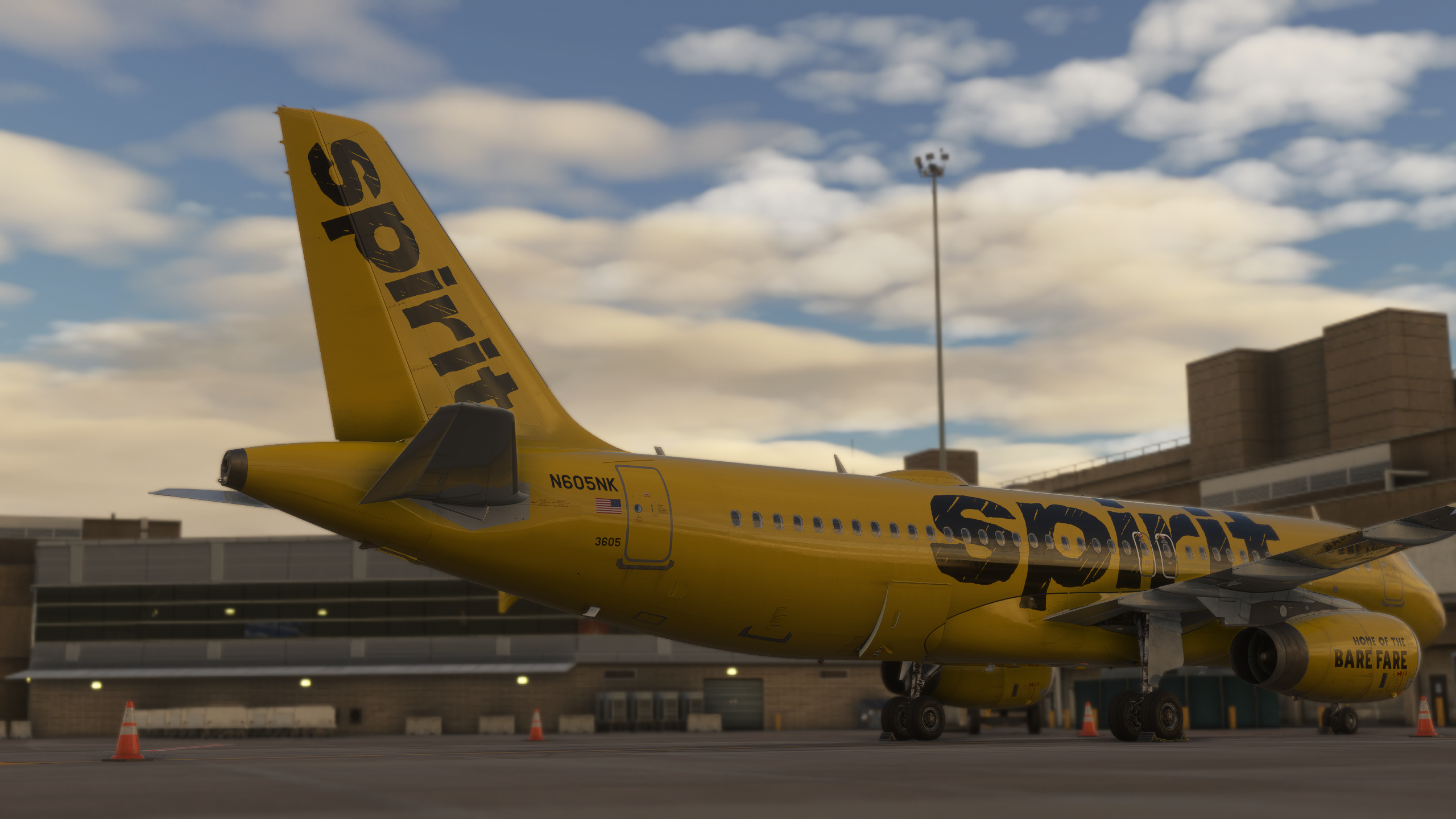
On May 2nd, 2026, Spirit Airlines (NK/NKS) announced an immediate and orderly wind-down of operations. Despite a restructuring plan agreed upon in March, a sudden and sustained surge in global fuel prices exhausted the company's remaining liquidity, leaving no path forward.
Our thoughts at Cardinal Horizon are with the thousands of pilots, cabin crews, and ground staff facing this transition. We wish them the best as they land new positions across the aerospace sector.
For Cardinal Horizon and the SimVector platform, this is the first time since opening our doors that we've had to face a major air carrier closing theirs. Therefore, we had to put together a plan on the spot for the best way to proceed, given the gravitas of this historic event.
The Preservation Plan
As a data provider for the flight simulation community, we believe our role is to ensure that while the physical airline stops flying, the operational record is preserved. To manage this, we are implementing the following archival process:
Final Historical Snapshot
We are currently leveraging our infrastructure to capture a wholesale, raw archival record of Spirit’s final schedules via our upstream data partners. To ensure the highest level of accuracy, we have secured individual flight records from the past two weeks, allowing us to map specific aircraft types to their historical routes. We are currently evaluating an expansion to a full month of operational data to ensure the capture is as comprehensive as possible.
Beyond schedules, we are aggregating aircraft-specific datasets from licensed government and community sources. Because Spirit leases its entire fleet, verifying these details through standard FAA records is a notorious challenge—but it is a gap we are actively closing to provide the most complete "End of Era" dataset available.
Immediate Catalog Removal
To improve the customer experience by preventing empty data pulls or issues within Schedule Cloud itself, Spirit Airlines has been removed from the SimVector Data Catalog effective immediately.
In addition, for those who have had Spirit Airlines added to their Schedule Cloud slots, I have manually removed Spirit from your slots. For those who may be affected by this specific change, I will be making a follow up email to notify you.
A "Legacy" Release
Once the data is processed and cleaned, we will release this "End of Era" dataset on our marketplace completely for FREE. This is our gift to the community to ensure that anyone who wishes to start up a legacy Spirit based virtual airline, or fly their old schedule, can do so with the confidence of accurate data.
Some Important Notes Regarding the Legal Landscape for VA Owners
We are aware that for many of our customers, flight simulation is a hobby. For some, the "legal brain" might not be fully engaged regarding how an orderly wind-down and liquidation process affects them. We feel a duty to both inform and educate our users; we don't want to lose customers to avoidable legal missteps or a lack of situational awareness.
Disclaimer: While I am not a lawyer, I am a legally savvy individual because I need to be to run a business spanning an international customer base. The following is not legal advice by any means.
For those not in the know, as Spirit moves from its previous restructuring efforts into a full wind-down, the environment shifts fundamentally. The priority is now liquidation, where the goal is to sell off every asset–including the name, logo, and trademarks (collectively known as Intellectual Property)–to pay back creditors.
What's Changed for The Simulation and Virtual Airline Community
For the part we care about in our industry as flight simmers, control of the Intellectual Property (IP) is moving from being controlled by the company itself to the creditors and liquidators. The current stakeholders–specifically Citadel, Cyrus Capital, and Ares Management Corp–will view the Spirit logo and "Howdy" branding strictly as financial assets to be protected and sold.
These new owners are incentivized to maximize the IP's value for a potential buyer. To a liquidator, "unauthorized" use (excluding clear cases of Fair Use) of IP is asset dilution. This can lower the sale price or even render the assets unsellable if the trademarks are deemed to be not actively protected.
Since these owners have a fiduciary duty to bondholders to recover every cent possible, they will enforce IP ownership with an iron fist.
Our Recommendation
It is in our best interest at Cardinal Horizon, to strongly advise our customers and the greater flight simulation community to approach the use of Spirit Airlines' Intellectual Property with extreme caution. As creditors acquire and attempt to sell off that Intellectual Property, defending those assets is going to be their top priority.
If you are planning to start a "Spirit Virtual Airline" using the datasets we make available, now is not the time to do so while the branding is under new management. We strongly suggest waiting for the "IP dust" to settle—ideally, until the trademarks officially expire.
To monitor the status of these trademarks as they change hands, you can visit: https://uspto.report/company/Spirit-Airlines-Inc
Moving Forward
This is a first for SimVector, but it reinforces why we built this platform: to bring professional-grade aeronautical data solutions and our background in the aerospace industry to the flight simulation market.
We look forward to continuing to serve the community through the evolution of SimVector, providing the tools and data that serve as the foundation for your adventure in the virtual skies.
Blue Skies and Tailwinds (especially to the Spirit family),
Taylor Broad

About The Author
Taylor Broad is a GIS Analyst and Full-Stack Engineer based in Tokyo, Japan. As the founder of SimVector, and owner of Cardinal Horizon, he brings 5+ years of professional aerospace industry experience in safety-critical software development to flight simulation and beyond.
For professional inquiries, connect on LinkedIn